
TPCx Is Shutting Down: Is Your Migration on Track?
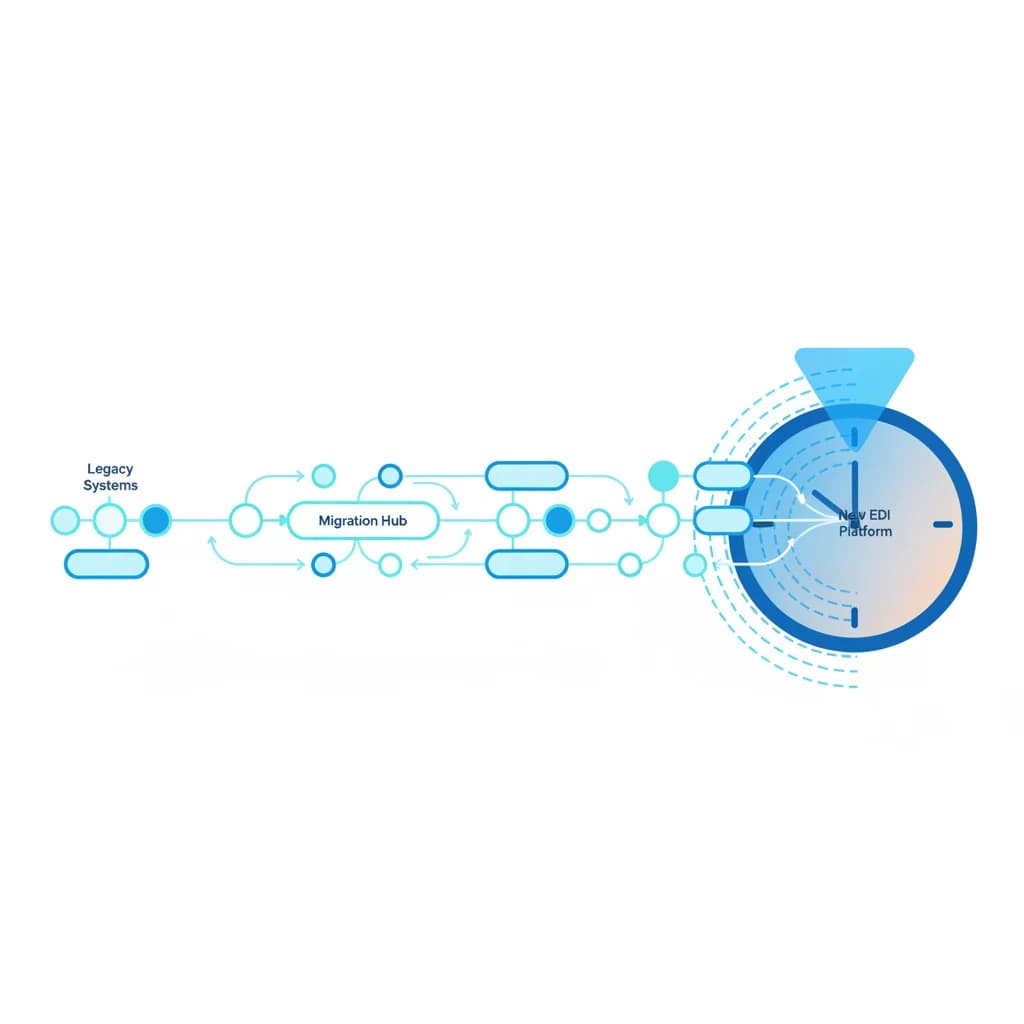
December 2026 is a hard deadline. When TPCx goes end-of-life, EDI transactions that run through it simply stop working — no grace period, no maintenance mode, no workaround.
And unlike a software upgrade you can schedule for a slow week, this one is coming whether you're ready or not.
If you haven't started your TPCx migration yet, you may already be behind. Here's how to know.
The Math Most Companies Are Getting Wrong
The most common mistake we see is treating the December 2026 EDI compliance deadline as the goal, not the floor. Teams assume they have until December to begin — when the reality is they need to be done by December.
A typical EDI migration runs 2–4 weeks per trading partner. That includes discovery, mapping, testing, and certification. If you have 20 trading partners, you're looking at 5–20 months of migration work in the best case. With 50 or more partners, the math gets uncomfortable fast.
Most organizations aren't migrating one partner at a time sequentially — but you're also not migrating them all at once. Realistically, you might be able to run 5–8 partners in parallel, depending on your team bandwidth and your partners' availability for testing and certification.
Run that math against your partner count. That's your actual trading partner migration timeline — not the deadline.

Master EDI Standards with Confidence
From ANSI X12 to EDIFACT, Comparatio handles every EDI standard so you can focus on growing your business, not managing transactions.
Request a Call
Where Your TPCx Migration Should Be Right Now
If you're reading this in mid-2026, here's a rough benchmark by partner count:
- Fewer than 10 partners: You still have comfortable runway — but "comfortable" doesn't mean "wait and see." Scoping and testing take longer than expected.
- 10–30 partners: You should be mid-migration. If you haven't started, start this week.
- 30+ partners: You needed to start months ago. If you haven't, you need an honest conversation about which partners are mission-critical and which to prioritize first.
The uncertainty isn't whether the deadline is real — it is. The uncertainty is how long your specific partner list will take, given variability in testing windows and partner responsiveness.
What Makes EDI Migration Slower Than You Think
Most of the timeline isn't in the technical work — it's in the coordination.
Trading partners need to agree on testing windows. Their IT teams have their own schedules. Certifications require back-and-forth that rarely goes smoothly on the first pass. A partner that says "we'll get to it in two weeks" can push a single migration out by six.
That's not a hypothetical. It's the norm. The technical lift of mapping EDI documents and configuring connections is predictable. Partner coordination is not.
This is why trading partner migration work that starts in October rarely finishes by December — even with fast technical execution. The buffer you need isn't for the work; it's for the waiting.
Three Questions to Answer Before You Start
- How many trading partners are you running through TPCx? Not roughly — exactly. Pull the list. You'll likely find inactive partners, duplicates, and relationships that have evolved since the original setup.
- Which partners are mission-critical? Not all EDI relationships carry the same operational weight. Prioritize the ones where a lapse would immediately affect your ability to ship or receive.
- What does your team have capacity for? Internal bandwidth is usually the real constraint. If your EDI team is one person managing everything else, the math changes significantly.
These answers shape everything: your timeline, your sequencing, your risk posture, and whether you need outside help to make the EDI compliance deadline.
How to Sequence Your EDI Migration
Once you have your partner list, don't just work through it alphabetically or in the order partners respond. Sequence deliberately.
Start with your highest-volume partners. These carry the most operational risk if they go dark, and they often require the most back-and-forth during certification. Getting them into the queue early gives you buffer if testing runs long.
Run discovery in parallel across all partners, even ones you won't migrate for months. Discovery — pulling specs, confirming contacts, understanding what documents are in scope — is lightweight. Doing it upfront means you won't hit a surprise at the last minute (a partner that requires a custom implementation, or one that's been acquired and has new EDI requirements).
Don't let easy partners crowd out critical ones. There's a natural temptation to knock out simple migrations quickly — and some of that is fine for team momentum. But if your three largest retail partners are still untouched in October because you spent the summer on smaller accounts, you've sequenced wrong.
A well-run EDI migration isn't just fast — it's sequenced to protect your most important trading relationships first, with a clear plan for the long tail.
What Happens If You Don't Make It
This is the part most planning conversations skip.
If a trading partner relationship doesn't migrate before TPCx shuts down, that EDI connection goes dark. Orders don't flow. ASNs don't transmit. Invoices don't process. For partners who require EDI compliance — most major retailers and distributors do — going dark isn't just inconvenient. It can trigger chargebacks, compliance violations, or losing the relationship entirely.
The operational disruption is real, and it compounds fast when multiple partners are affected at the same time.
Don't Wait for a Crisis to Start the Conversation
The organizations finishing their migrations smoothly right now started early — not because they had more time, but because they treated the deadline as a hard constraint from the beginning. They prioritized high-volume partners first, built testing cycles into their schedule, and got ahead of the coordination delays instead of being surprised by them.
At Comparatio, a typical EDI migration engagement runs in four phases: discovery (what partners, what documents, what specs), mapping and build, testing with each trading partner, and certification and go-live. Each phase has dependencies — you can't test until the mapping is done, and you can't certify until testing passes. That's why the 2–4 week per-partner number isn't pessimism; it's the reality of how partner coordination actually flows.
If you're behind, the answer isn't to rush the technical work — it's to add more parallel tracks and get discovery started on your remaining partners immediately, so nothing is waiting on information that could have been gathered weeks earlier.
If you're not sure where your migration stands — or you need a second opinion on whether your current timeline is realistic — that's worth a conversation now, not in October.
→ See how Comparatio handles TPCx migration, including what a migration looks like from day one to go-live.
Related Reading: Understanding ANSI X12 EDI Standards · Amazon EDI Integration for Suppliers
Frequently Asked Questions
When is TPCx shutting down?
TPCx reaches end-of-life in December 2026. After that date, EDI transactions running through it stop working with no grace period, maintenance mode, or workaround available.
How long does an EDI migration take per trading partner?
A typical EDI migration runs 2–4 weeks per trading partner, covering discovery, mapping, testing, and certification. Most organizations can run 5–8 partners in parallel depending on team bandwidth and partner availability for testing.
What happens if I miss the TPCx migration deadline?
If trading partner relationships are not migrated before TPCx shuts down, those EDI connections go dark. Orders don't flow, ASNs don't transmit, invoices don't process — which can trigger chargebacks, compliance violations, or the loss of trading partner relationships entirely.
Table of Contents
Subscribe to the Blog
Get the latest EDI insights delivered to your inbox.
Related Articles

April 8, 2026
Essential Guide to EDI 843: Uses, Format, and Examples
Discover EDI 843: Definition, specifications, transactions, and benefits for seamless business operations.
Read More →
April 3, 2026
Mastering EDI 844: Essential Guide & Examples
Explore EDI 844 specifications, chargebacks, and examples in this comprehensive guide for IT professionals and supply chain managers.
Read More →
April 1, 2026
The Complete Guide to 990 EDI: Definition, Specs & More
Discover the essential guide to 990 EDI, covering definition, specifications, and implementation for logistics professionals.
Read More →
Transform Your Supply Chain Today!
Ready to revolutionize your supply chain management? Our advanced software solutions are designed to streamline your operations, enhance efficiency, and boost your bottom line. Don't miss out on the opportunity to elevate your business.
Request a call