

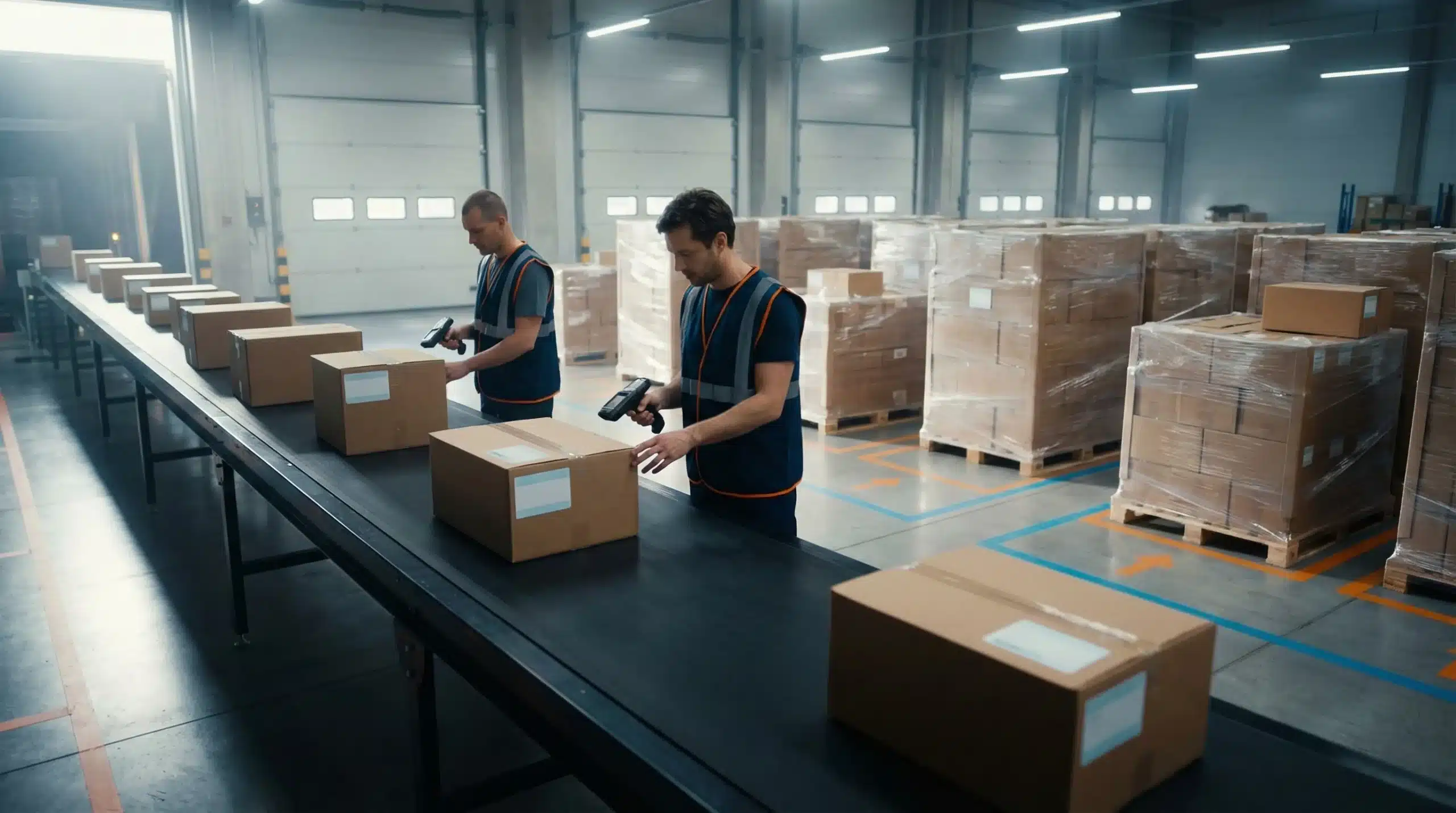
We’ve all been there: you’re staring at a backlog of orders, labor is tight, and every late shipment feels like it lands directly on your desk. Someone suggests automation, and the room immediately splits. One side sees speed and scale. The other sees cost and risk. If you’re trying to make a confident business case, warehouse automation ROI is the number that settles the debate. Sound familiar?
You’re not alone. Executives and logistics leaders tell us the hardest part is not choosing technology, it’s proving the payoff in a way finance, operations, and the board all trust. In this guide, we’ll walk through a practical framework to calculate ROI, include real-world examples, and highlight trends that can change your assumptions over the next 3 to 5 years.
Introduction to warehouse automation ROI: what we are really measuring
At its simplest, ROI asks: what do we get back compared to what we spend? In warehouses, the “get back” is rarely just labor savings. It’s also fewer errors, higher throughput, better space use, and the ability to handle peaks without chaos.
Understanding ROI in warehouse automation
Most teams calculate ROI with a formula like: (Annual benefit – Annual cost) / Initial investment. That’s a good start, but it can understate value if we ignore benefits like reduced overtime, fewer chargebacks, and improved inventory accuracy.
To keep the analysis credible, we recommend separating:
- Hard savings (measurable cost reductions like labor hours, rework, damages)
- Hard avoidance (costs you would have incurred without automation, like adding headcount for growth)
- Revenue and service impact (fewer stockouts, faster ship times, higher fill rates)
Importance for decision-makers
For decision-makers, warehouse automation ROI is not just a finance metric. It is a risk management tool. A well-built model clarifies what must go right, what can go wrong, and which operational levers matter most.
It also helps teams align early on questions like: Are we optimizing for cost per order, same-day shipping, labor resilience, or scalability? The “best” automation investment depends on that answer.
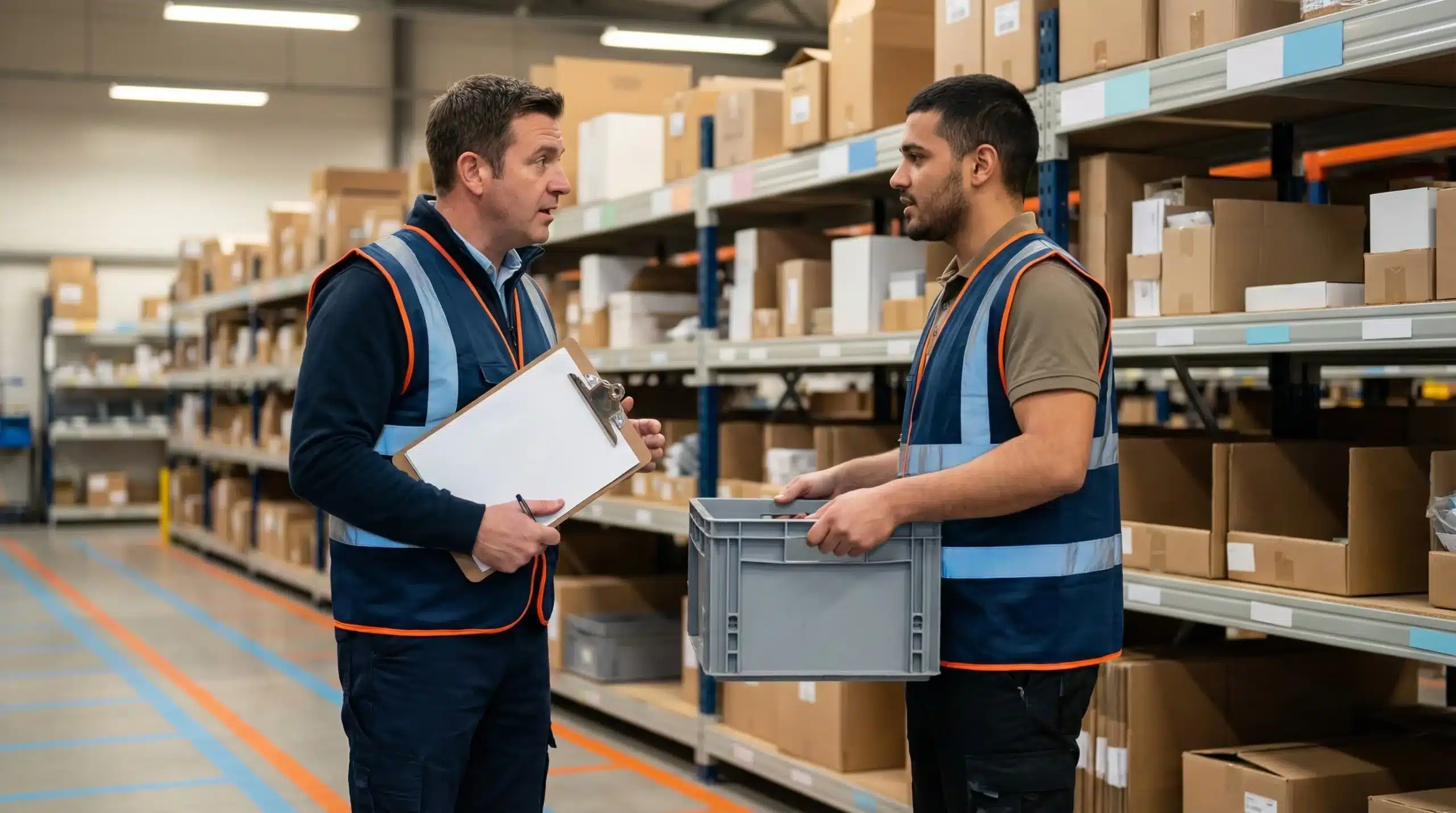
Quantitative drivers of warehouse automation ROI (the numbers finance will ask for)
If we want buy-in, we need clean inputs and conservative assumptions. Start with a baseline of today’s performance, then model a steady-state future after ramp-up. Avoid promising day-one perfection, because implementation curves are real.
Quantitative factors to include
- Labor productivity: pick rates, pack rates, replenishment time, receiving putaway time
- Labor cost: wages, overtime, temp labor, turnover and training costs
- Throughput: orders per hour, lines per hour, dock-to-stock time
- Accuracy and quality: mispicks, shorts, damages, returns, reships
- Space utilization: storage density, slotting efficiency, deferred expansion
- Equipment and maintenance: service contracts, spare parts, downtime impact
- IT and software: WMS licensing, integrations, support, cybersecurity requirements
A simple ROI calculation framework we can actually use
We like to build ROI in four steps so it holds up under scrutiny:
- Baseline: document current costs and KPIs (last 12 months plus peak season)
- Future state: estimate new KPIs with automation (include ramp-up and learning curve)
- Investment and ongoing costs: CapEx, implementation, training, software, maintenance
- Financial outputs: payback period, NPV, IRR, and sensitivity scenarios
Then pressure-test the model with a sensitivity table: what happens if volume growth is lower, wage inflation is higher, or uptime is 95 percent instead of 99 percent? This is where ROI becomes decision-grade.
Qualitative benefits that still move warehouse automation ROI
Some of the biggest wins are hard to tie to a single line item, but they show up in performance and customer experience. Ignoring them can lead us to underinvest or choose the wrong solution.
Qualitative factors to capture (without hand-waving)
- Safety: fewer incidents from less travel, fewer lifts, better ergonomics
- Employee experience: lower burnout, easier onboarding, clearer work instructions
- Service reliability: fewer late shipments, fewer split orders, better promise dates
- Operational resilience: ability to run during labor shortages or demand spikes
- Process standardization: consistent workflows across shifts and sites
To make these credible, we can attach proxy metrics. For example, track recordable incidents, turnover rate, training time to proficiency, customer complaints, and chargebacks. Even if we do not monetize every item, showing the trend and risk reduction strengthens the case.
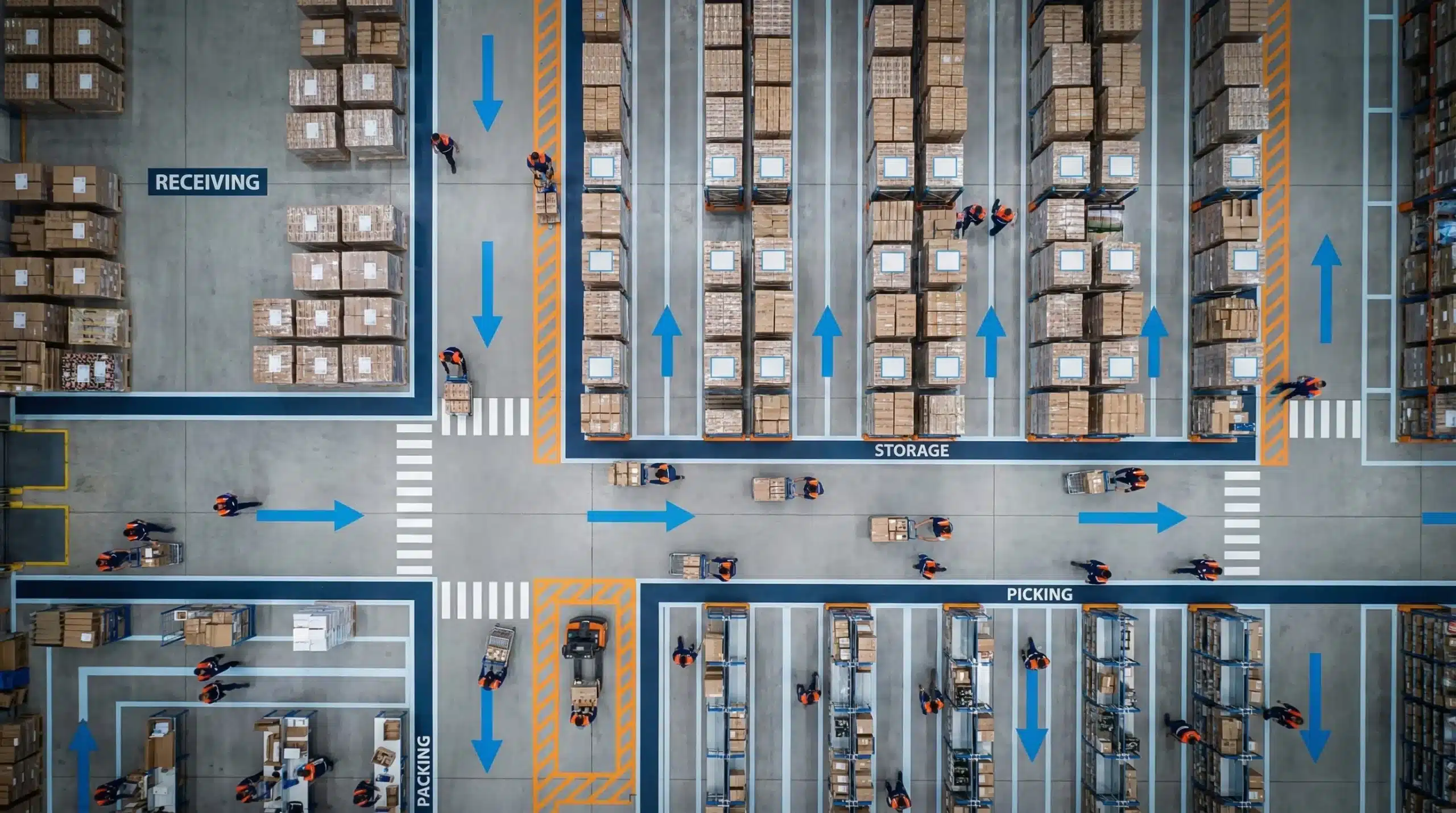
Real-world case studies: warehouse automation ROI in action
Numbers feel real when we can see how they play out in operations. Below are simplified examples based on common patterns we see across retail and distribution. Your results will depend on volume profile, SKU mix, and process maturity, but the mechanics are consistent.
Case study 1: Large retailer (automated picking and verification)
A large retailer struggled with peak season staffing and mispicks that triggered reshipments and customer service escalations. They introduced automated picking support and verification steps to reduce travel and catch errors before cartons closed.
- Outcome: 30 percent reduction in direct picking labor hours
- Accuracy: 20 percent improvement in order accuracy
- Service impact: fewer reships and fewer “where is my order” contacts
What made the ROI work was not just labor reduction. The retailer also reduced peak overtime and improved on-time performance, which lowered downstream costs and protected customer loyalty.
Case study 2: Mid-sized distributor (automated sortation and flow)
A mid-sized distributor faced congestion at packing and shipping, especially when multiple carriers had tight cutoffs. They implemented automated sortation to route cartons and totes more predictably.
- Outcome: 25 percent throughput improvement from pack to ship
- Errors: significant reduction in missorts and carrier mislabels
- Scalability: handled growth without adding equivalent headcount
In this scenario, warehouse automation ROI improved because the operation avoided the “hidden tax” of late cutoffs: expediting, split shipments, and lost capacity the next day.
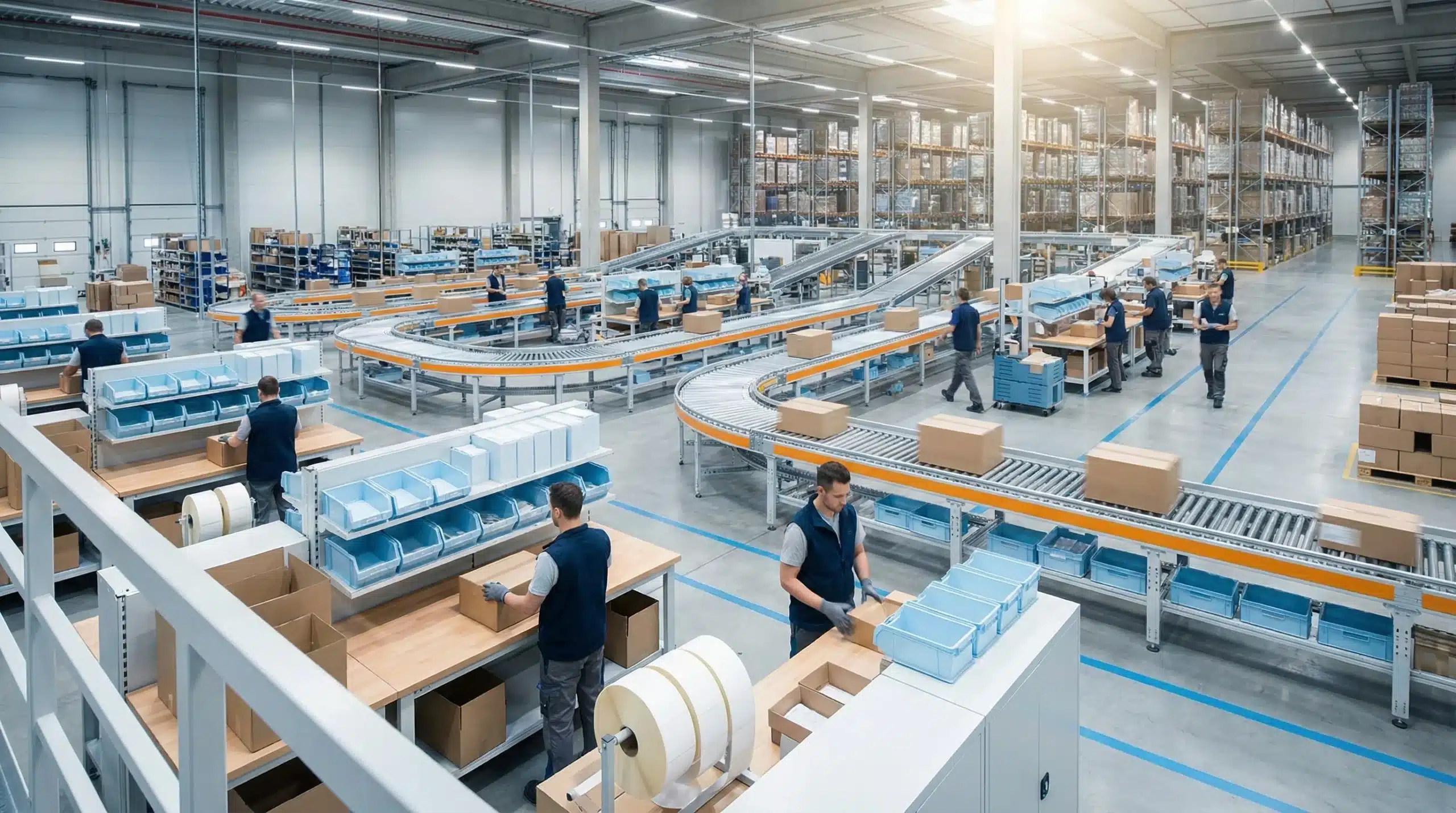
Comparing automation vs manual processes: where ROI usually appears first
When we compare automated and manual workflows, the gap often shows up in consistency. Manual systems can be flexible, but they depend heavily on tribal knowledge and heroic effort. Automation reduces variance, which is why executives like it: performance becomes more predictable.
Efficiency gains
Automation typically improves efficiency through:
- Reduced travel: goods-to-person, better slotting, smarter task interleaving
- Fewer touches: streamlined receiving, putaway, picking, and consolidation
- Better flow: less queue time at pack, sort, and ship
- Faster exception handling: real-time visibility into shortages and misroutes
Even modest gains matter. A 10 percent throughput improvement can delay the need for a second shift or facility expansion, which can be a major ROI lever.
Cost implications (and common surprises)
Manual operations often look cheaper until we include the full cost-to-serve. In ROI modeling, watch for these surprises:
- Turnover cost: recruiting, training, and productivity loss during ramp-up
- Quality cost: returns, reships, damages, and chargebacks
- Peak premiums: overtime, temp labor markups, and management overhead
- Growth cost: adding headcount, supervisors, and space to keep up
To ground your assumptions, benchmark against industry reporting from sources like Supply Chain Quarterly insights on logistics operations and Logistics Management coverage of warehouse technology. External benchmarks do not replace your data, but they help validate whether your targets are realistic.
Future trends that will shape warehouse automation ROI in the next 3 to 5 years
ROI is not static. The technologies we choose today should still make sense as volumes shift, customer expectations rise, and labor markets stay unpredictable. Planning for change is part of protecting the investment.
Emerging technologies to watch
- AI-driven labor and slotting optimization: better forecasting, dynamic wave planning, smarter replenishment
- Computer vision: automated dimensioning, damage detection, and verification
- IoT and real-time monitoring: asset tracking, predictive maintenance, energy management
- Robotics-as-a-service models: lower upfront costs and faster scaling
These trends can improve warehouse automation ROI by increasing utilization and reducing downtime. They also shift the conversation from “one big project” to continuous optimization.
Long-term ROI impact: how to keep the value compounding
To sustain ROI after go-live, we need governance, not just hardware. The strongest programs treat automation as a capability that gets tuned over time.
- Measure weekly: track labor hours per order, accuracy, and cycle time by zone
- Audit exceptions: identify the top 3 failure modes and fix root causes
- Re-slot quarterly: align fast movers with the best locations as demand changes
- Train continuously: refresh SOPs and cross-train to reduce single points of failure
When we do this, warehouse automation ROI improves year over year because the system runs closer to its designed capacity and adapts to new business requirements.
Conclusion: turning warehouse automation ROI into a decision you can defend
If we’re honest, most automation debates are really about confidence. We want to know the numbers are real, the risks are understood, and the operation can absorb change without disruption. By combining quantitative drivers (labor, throughput, accuracy, space) with qualitative impacts (safety, resilience, customer experience), we can build a warehouse automation ROI model that executives and operators both trust.
If you want to move from “we think it will pay off” to “we can prove it,” let’s make it concrete. Schedule a demo or contact our team for a personalized ROI analysis based on your volumes, processes, and constraints. Explore how our platform supports automation-enabled operations on our warehouse solutions page. Or, if you’re already evaluating vendors, reach out to review your business case with Comparatio before you commit.
Frequently Asked Questions
What is warehouse automation ROI and why is it important?
Warehouse automation ROI measures the return on investment from automating warehouse operations. It’s crucial because it helps decision-makers understand the financial and operational benefits of automation, such as labor savings, fewer errors, and improved throughput. A well-calculated ROI can guide strategic decisions, aligning teams on priorities like cost efficiency and scalability.
How do you calculate warehouse automation ROI?
To calculate warehouse automation ROI, use the formula: (Annual benefit – Annual cost) / Initial investment. Include hard savings, hard avoidance, and revenue impacts for a comprehensive view. Comparatio suggests using conservative assumptions and a baseline of current performance to ensure credible analysis that finance teams can trust.
What are the key benefits of warehouse automation beyond labor savings?
Beyond labor savings, warehouse automation offers benefits like reduced errors, higher throughput, optimized space usage, and better handling of peak periods. These factors collectively enhance operational efficiency and service levels, contributing to a positive warehouse automation ROI.
What quantitative factors should be considered in warehouse automation ROI?
Key quantitative factors include labor productivity metrics like pick rates and replenishment times, and labor costs such as wages. Comparatio advises incorporating these elements to build a robust ROI model that accurately reflects potential gains from automation.
How can warehouse automation ROI help in risk management?
Warehouse automation ROI serves as a risk management tool by clarifying potential outcomes and operational levers. A detailed ROI model identifies what must go right and what can go wrong, helping decision-makers mitigate risks and optimize investments for objectives like cost efficiency and labor resilience.