
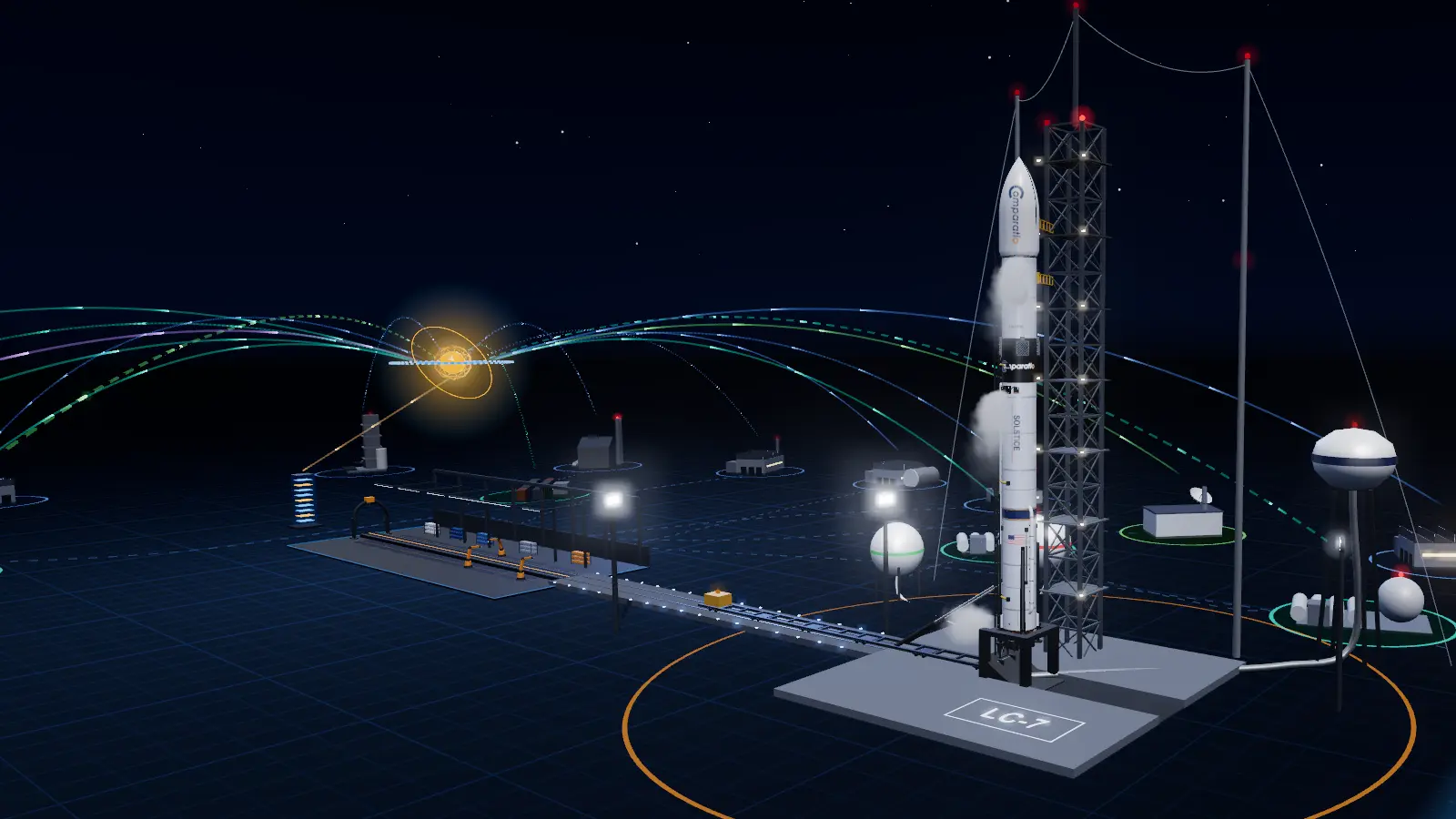
 Play the 3D story10 chapters · pause, skip and open any document as you go
Companies, people and figures in this story are illustrative. Open full screen
Follow one launch vehicle from a launch-services order to liftoff. Along the way, 17 trading partners exchange the documents that order every part, certify it, ship it and pay for it: X12, EDIFACT and JSON, plus PDFs that Comparatio PDF Import turns into EDI. All of it passes through Comparatio.
Play the 3D story10 chapters · pause, skip and open any document as you goCompanies, people and figures in this story are illustrative. Open full screen
Chapter by chapter
From the first 850 to the last 820, every document behind Solstice flight 7 passed through one Comparatio hub: translated, validated, acknowledged and logged. The certificates travelled with the parts, and the PDFs from partners without EDI arrived as EDI too.
L−12 months · Contract
It starts with a ride to orbit. Celestra Networks books a dedicated launch for its Celestra-4 satellite with an X12 850: one line for each payment milestone, from contract signature to liftoff. Halyard confirms with an 855. A U.S. government office buys two rideshare slots on the same flight with its own 850. The ERP now has a mission, a launch window and a customer for every kilogram on board.
L−11 months · Purchasing
Some parts take most of a year to build, so the ERP orders them first. The 850s go out in the format each supplier speaks: X12 over AS2, SFTP and a VAN, JSON over the API for the avionics house, and EDIFACT ORDERS for the turbopump maker in France, whose ORDRSP arrives as an 855. Delgado Precision, a machine shop with no EDI, answers with a PDF that becomes an 855. Long-lead suppliers report progress every month with an 870.
L−8 months · Tanks
Rocket tanks start as aluminum-lithium plate, and every plate needs a pedigree. Keystone Light Alloys ships by rail with a 404 bill of lading, an 856 that lists the plates by heat number, and an 863 with the chemistry and tensile results for that heat. The ERP releases plate to the weld cell only when the 863 matches the heat on the 856. The receipt posts an 861, spare plate goes into bond on a 943 and 944, and the barrels are friction-stir welded into tanks.
L−5 months · Propulsion
Vauclair ships eight turbopumps by sea with an EDIFACT DESADV, which Comparatio delivers as an 856 listing every pump by serial number. Each engine is hot-fired at Rimrock Test Services before anyone trusts it, and the test site sends an 863 with chamber pressure, thrust and burn time. Only engines with a passing 863 are installed: seven M7 engines on the thrust structure. The 861 goes back to France as an EDIFACT RECADV.
L−4 months · Receiving inspection
Flight hardware needs proof. Ardent’s 856 and 863 for nine helium COPVs arrive, but the 863 has no lot number for the carbon-fiber overwrap. Comparatio stops it at the hub, the tanks go on hold, and an 842 nonconformance report tells Ardent exactly what is missing. The corrected 863 follows within the hour. Delgado Precision emails a PDF packing slip and Certificate of Conformance, and Comparatio PDF Import delivers them as an 856 and an 863.
L−3 months · Next flight out
The flight computers are running late, so Halyard sends an 860 change to pull the delivery forward. Lumenwright accepts with an 865 over its API and books the next flight out; its 856 lists every unit by serial, and the forwarder’s 214 milestones arrive as JSON. The bonded warehouse reports stock with an 846, releases COPVs and brackets with a 940 and confirms with a 945. The 861 closes the loop.
L−6 weeks · Integration
The big pieces arrive. Halyard tenders the oversize fairing load to Longspan Heavy Haul with a 204, gets a 990 back and follows the trip by 214. Tamarack’s 856 carries a serial number and certificate reference for each piece. Celestra is a shipper too: its satellite travels in a climate-controlled container with its own 856, and every 214 from Calder carries the container temperature. Then the stack comes together, and the 861 confirms receipt.
L−3 days · Launch Complex 7
The rocket rolls out on its transporter-erector and is raised vertical on Launch Complex 7. Propellant is hazardous cargo, and the paperwork says so: the 204 load tenders to Frostline and Sunbelt carry the UN numbers for liquid oxygen (UN1073) and liquid methane (UN1972). Each carrier accepts with a 990 and reports every tanker with a 214, so the launch team knows exactly when the propellant arrives.
Launch day · 04:00 EDT
Launch day, 04:00 at the Cape. Every part on this rocket arrived with its paperwork: the plate with its mill certificate, the engines with their hot-fire reports, the COPVs with a corrected 863, the satellite with its temperature log. The launch team works from a clean board. At T−0 seven engines light, the hold-down clamps let go, and Solstice climbs off Launch Complex 7.
L+2 weeks · Settlement
Money follows the milestones. Halyard invoices Celestra for the liftoff milestone with an 810, and Celestra pays through its bank with an 820 that names the invoice. The rideshare is billed the government way: an 857 Shipment & Billing Notice goes into WAWF, the government’s invoicing system. Suppliers are paid from Halyard’s own 861 receipts with 820s, and Delgado’s PDF invoice becomes an 810.
Documents in this story
In the order they first appear. Open one to see its segments, what each field carries and how trading partners use it.
More stories

A web order, a 500-car fleet order and a PDF purchase order become one crossover: battery cells by sea, drive units from Germany, a sequenced line and a paid invoice.
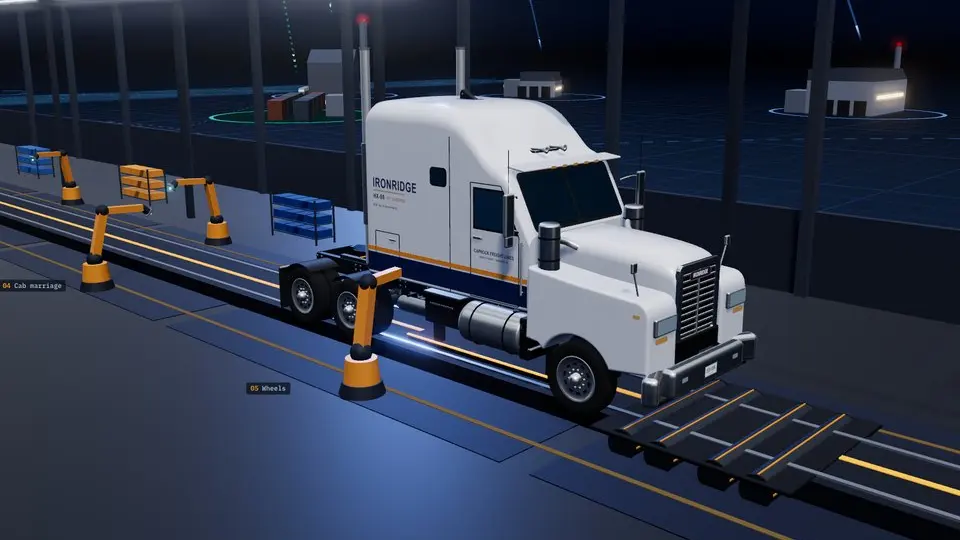
A fleet orders 120 sleeper tractors, then moves 40 of them to mountain routes. Frame rails come by rail, axles in sequence and transmissions by sea, until the trucks drive to their owners.
Bring your partner list and the documents you exchange today, and we’ll talk through how they would run through Comparatio.